
We Live Above the Neck
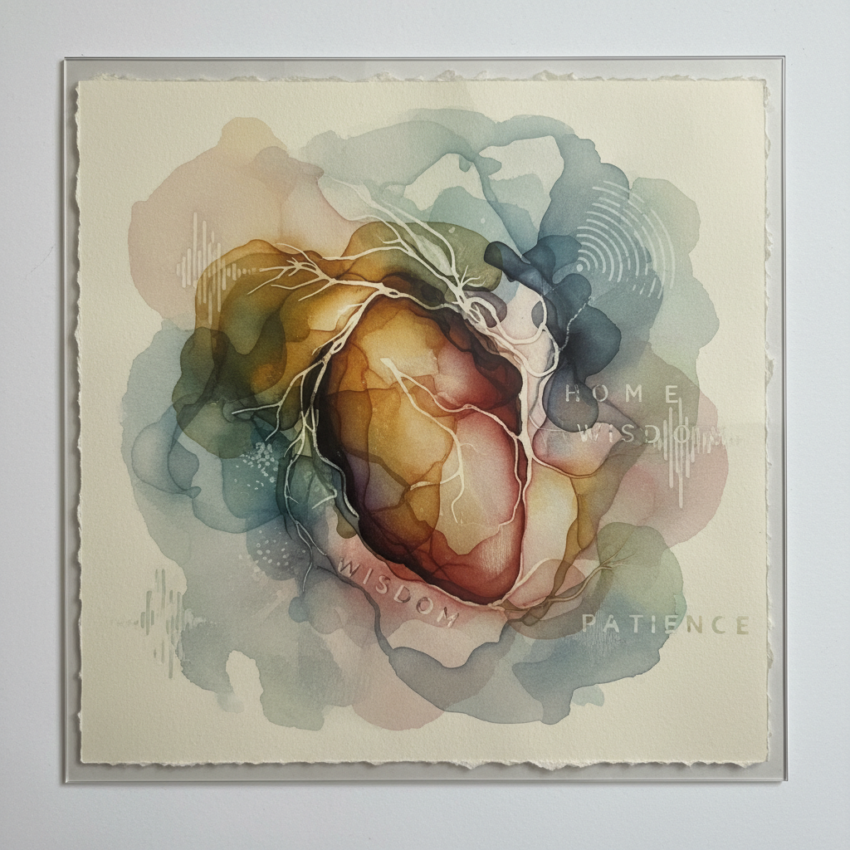
We spend most of our lives as floating heads. Thinking, planning, narrating, worrying — the whole enterprise of modern consciousness seems to happen from the jaw upward, as though the body were merely a vehicle for transporting the brain from one meeting to the next. We forget there is a belly. We forget there are feet. Somewhere between childhood and the pressures of adult life, we quietly abandoned the territory below our collarbones and took up permanent residence in the mind.
And the body noticed. It always does. The tension that gathers between the shoulder blades during a difficult week. The jaw that clenches in sleep. The shallow breath we don’t realize we’re breathing until someone asks us to take a deep one. These are not malfunctions. They are messages — dispatches from a body that has been holding what the mind refused to feel. We carry more in our tissue than we know, and most of us have simply never been taught to check.
What the Research Reveals About Listening Inward
The body scan — that deceptively simple practice of moving attention slowly from one region of the body to the next — is one of the most studied techniques in the contemplative science literature. Jon Kabat-Zinn placed it at the foundation of Mindfulness-Based Stress Reduction for a reason. Research from the University of Massachusetts Medical Center and subsequent studies at Oxford, Toronto, and elsewhere have consistently shown that regular body scan practice reduces cortisol levels, lowers markers of chronic inflammation, and improves what neuroscientists call interoceptive awareness — the brain’s ability to accurately perceive internal bodily signals.
This last point is worth pausing on. Interoception is not a luxury of the contemplative life. It is the foundation of emotional regulation itself. The work of Antonio Damasio and Bud Craig has demonstrated that our capacity to feel emotions — to know whether we are angry, afraid, exhausted, or at peace — depends on how well the insula and related brain regions process signals from the body. When we lose touch with the body, we don’t just lose physical awareness. We lose emotional clarity. We become strangers to our own inner weather, reacting to feelings we cannot name because we never felt them arrive.
What Shifts When We Turn Toward the Body
The first thing most of us notice when we begin a body scan is how much we have been ignoring. There is a knee that has been aching for hours. There is a tightness in the throat that, when we finally give it attention, seems to soften — not because we fixed it, but because we acknowledged it. This is the paradox at the heart of the practice: the body does not need us to solve it. It needs us to be present to it.
There is a quality of attention involved in body scanning that is different from our ordinary mode. It is not analytical. It is not diagnostic. We are not looking at the body the way a mechanic looks at an engine. We are listening from within — inhabiting each region with the same quiet receptivity we might bring to sitting beside a friend who needs to talk. The practice trains us to meet sensation without judgment, without rushing to categorize it as good or bad. And in that space of neutral, patient attention, something remarkable happens: the nervous system begins to downregulate. The parasympathetic response — what researchers sometimes call the “rest and digest” state — comes online. Not because we forced relaxation, but because presence itself is the body’s cue that it is safe.
Over weeks and months of practice, this shift becomes structural, not just momentary. Imaging studies have shown increased gray matter density in the insula and somatosensory cortex among long-term meditators — the brain literally builds more architecture for body awareness. But the subjective shift is what practitioners remember most. We begin to catch stress earlier, in its physical infancy, before it becomes a full emotional cascade. We notice the first flicker of tension in the chest before it becomes anxiety. We feel the heaviness in the limbs before it becomes burnout. The body becomes an early warning system — but only if we are willing to listen.
What We Return To
We return to something that was never actually lost — only overlooked. The body has been here the whole time, breathing, digesting, holding us upright, managing a thousand processes we never had to think about. The body scan is not an advanced technique. It is a homecoming. It is the practice of remembering that awareness is not confined to thought, that intelligence lives in the soles of the feet and the space between the ribs and the slow rhythm of the diaphragm.
What we discover, when we practice this regularly, is that the body is not an obstacle to clarity — it is the ground of it. The great contemplative traditions have always known this. The breath practices of yoga, the sitting postures of Zen, the walking meditations of Theravāda Buddhism — all of them point to the same truth: awakening does not happen above the neck. It happens in the full length of this living, sensing, breathing body.
Today, even for just five minutes, try arriving where you already are. Lie down or sit comfortably. Begin at the crown of the head or the tips of the toes — direction matters less than sincerity — and move your attention slowly, region by region, as though you are visiting rooms in a house you have not entered in years. Notice what is there without needing to change it. Let the body speak in its own language of pressure, warmth, tingling, heaviness, space. You may be surprised by what it has been waiting to tell you.