
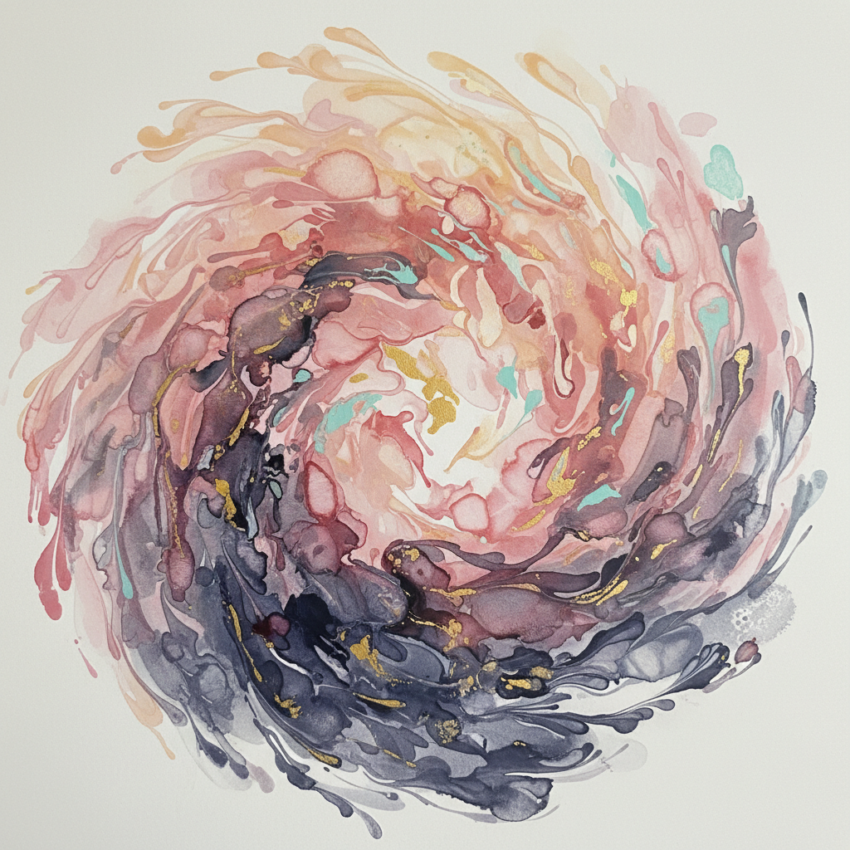
What We Carry
We carry more than we admit. Not just the memory of what happened, but the weight of what we decided it meant — about us, about the world, about what we deserve. Forgiveness is one of those words that arrives loaded. We hear it and something in us tightens, because we suspect it will be asked of us before we are ready, or offered to us with conditions we never agreed to. So we hold on. We rehearse the story. We mistake the grip for strength.
And the body keeps the record. Anyone who has ever held a grudge for years knows this not as metaphor but as physiology — the jaw that won’t unclench, the shoulders that climb toward the ears at the mention of a name, the low hum of cortisol that colors an entire afternoon when a memory surfaces uninvited. We don’t just remember hurt. We re-inhabit it. The nervous system doesn’t distinguish cleanly between then and now; it responds to the emotional signature of a memory as though it were happening in real time. We live inside our unforgiveness the way we live inside a room with no windows — so gradually that we forget there was ever light.
What the Research and the Practice Reveal
The science here is remarkable and, in its own way, compassionate. Dr. Fred Luskin’s forgiveness research at Stanford showed that individuals who practiced structured forgiveness protocols experienced measurable decreases in hurt, anger, and physical stress symptoms — while simultaneously reporting greater optimism and self-efficacy. Neuroimaging studies have shown that the act of forgiving activates regions associated with empathy, cognitive reappraisal, and emotional regulation — the prefrontal cortex gently taking the wheel from the amygdala’s alarm system. Forgiveness, it turns out, is not a single emotional event. It is a learned skill. A practice. Something the brain can be trained to do.
Contemplative traditions arrived at this understanding centuries before the fMRI. Buddhist loving-kindness practice, the Christian tradition of confession and release, the Hawaiian practice of Ho’oponopono — all of them converge on a shared insight: that holding onto resentment binds us to the past in ways that contract our capacity for presence. The practice isn’t about condoning what happened. It never was. It is about recognizing that the story we keep telling has become a cage, and that we — not the person who hurt us — hold the key.
What the research and the wisdom traditions agree on is this: forgiveness is not a feeling we wait for. It is a direction we choose. Often long before the feeling arrives.
What Shifts When We Turn Toward It
There is a moment in practice — sometimes on the cushion, sometimes standing at the kitchen sink — when we stop arguing with reality. Not because we agree with what happened, but because we finally feel the cost of carrying it. We notice the weight. We notice how much energy it takes to maintain a grievance, how the mind returns to it like a tongue to a broken tooth, how the whole organism organizes itself around the wound. And in that noticing, something loosens. Not dramatically. Not all at once. But the way ice loosens in a spring river — slowly, then with a quiet, gathering momentum.
This is the paradox that surprises people: forgiveness often begins not with thinking about the other person, but with attending to ourselves. We turn inward. We feel what is actually here — the hurt beneath the anger, the grief beneath the hurt, the love beneath the grief. Layer by layer, the practice peels us open. And what we find at the bottom is not weakness. It is space. The same space that was there before the wound, waiting patiently for us to return.
The body responds almost immediately. Heart rate variability improves. The chronic inflammation associated with sustained hostility begins to quiet. We sleep differently. We breathe differently. Not because we’ve forgotten, but because we’ve stopped letting the memory run the show.
What We Return To
We return to ourselves. That is what forgiveness gives back — not innocence, not the erasure of what happened, but the full, unencumbered use of our own attention. When we forgive, we reclaim the mental bandwidth that was locked in a loop of replaying and rehearsing. We get our life force back. We get our now back.
And perhaps the deepest gift is this: when we forgive, we discover that we are not defined by what was done to us. We are defined by what we choose to do next. The wound becomes part of the story, but it is no longer the narrator. We are the narrator. We always were.
This is not easy work. Let us be honest about that. Some forgiveness takes years. Some arrives in waves — present one morning, gone by evening, returning again months later in a form we barely recognize. That is not failure. That is the natural rhythm of a heart learning to open after it was given every reason to close. We honor that rhythm. We trust it. We keep choosing the direction, even when the feeling hasn’t caught up yet.
Today, if you feel ready — or even if you feel only the faintest willingness to feel ready — let the affirmation settle into the body like a slow exhale. Speak it not as a performance of virtue, but as a quiet declaration of sovereignty over your own inner life. You have carried this long enough. You are allowed to set it down.