
The Bag We Didn’t Know We Were Carrying
It started, as these things often do, with a shoulder ache. Not the kind that comes from sleeping wrong—the kind that comes from holding something invisible for too long. We sat down this morning with our coffee still too hot to drink, and noticed the tension had already arrived before we had. Our jaw was set. Our breath was shallow. And when we paused long enough to ask what are we bracing for?, the answer was startling in its honesty: nothing that was actually happening. We were bracing for Thursday’s meeting, for next month’s bills, for a conversation we hadn’t had yet and might never need to have. We were managing stress that didn’t belong to this moment—carrying grocery bags from a store we hadn’t even walked into.
The Strange Permission of “Allowed”
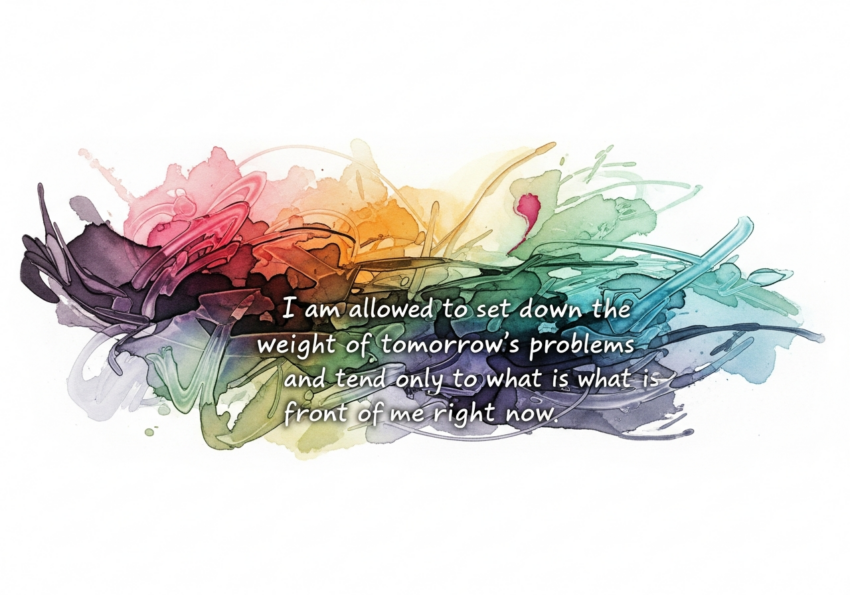
There’s something tender about the word allowed. It implies that somewhere along the way, we stopped giving ourselves permission. And that’s exactly what had happened. We’d internalized the idea that vigilance equals responsibility—that if we set the weight down, even briefly, we’d be caught off guard, punished for our ease. So we carried it all, every possible future problem stacked in our arms like firewood, and then wondered why our backs hurt and our sleep was thin. Today we tried something radical in its simplicity: we set the bundle down. Not forever. Not with the promise that those concerns don’t matter. Just for now. Just for the length of one exhale, then another, then a third that came out shaky and a little bit like crying.
And here’s what was funny—almost laughably so—the problems didn’t crash to the floor and shatter. They just sat there, quiet, like luggage at an airport carousel. Still ours if we wanted them. But not demanding to be held every single second.
Tending to What’s Here
With our hands metaphorically free, we noticed what was actually in front of us. The coffee had cooled to drinking temperature. A bird outside the window was doing that persistent single-note call, the one that sounds like it’s trying to remember a song. Our feet were on the floor, and the floor was solid, and that was more than enough for right now. We let our attention narrow to just this—just the warmth of the mug, the slight grain of the ceramic under our thumb, the ordinary gift of a morning that asked nothing of us except to be lived through. Stress didn’t vanish. It rarely does, and anyone who promises otherwise is selling something. But it softened. It moved from the foreground to the periphery, like background noise in a café you stop hearing once you’re deep in conversation with someone you love.
We noticed, too, that tending to what’s here doesn’t mean ignoring what’s coming. It means trusting that when Thursday arrives, we’ll meet Thursday. When the conversation needs to happen, we’ll have it. Our future selves are not helpless—they’ll have resources, ideas, and resilience we can’t even imagine yet because they don’t exist yet. What a relief to let them handle their own weather.
What We Carried Away
By the end of our sitting, the shoulder ache hadn’t disappeared completely—these things are honest, and the body keeps its own schedule. But something had loosened. A small, interior unclenching, like a fist relaxing into an open hand. We didn’t solve our stress. We just stopped insisting that we solve all of it at once, in advance, before breakfast. And that turned out to be the most generous thing we could have done for ourselves today: to admit that we are finite creatures with finite arms, and that setting something down is not the same as giving up. It is, in fact, the opposite. It’s choosing to be here, capable and present, for the one life actually unfolding in front of us.
If you felt that familiar tightness today—the one that belongs to a tomorrow you can’t yet touch—perhaps sit with us for a moment. Set the weight down, just here, just now. You’re allowed. You always were.