
The Blank Page on the Kitchen Table
It started with a notebook left open on the kitchen table — the one with the coffee ring on the cover and the bent corner from being shoved into a bag too many times. We’d been meaning to write something, sketch something, start something, for weeks. But this morning, the light came in at that particular angle through the window, the kind that makes dust motes look almost intentional, and we sat down before we could talk ourselves out of it. The pen was out of the cup. The hand was moving. And the first thing that landed on the page was, frankly, terrible.
We noticed the flinch immediately — that quick inner tightening, the one that says this isn’t good enough before the ink has even dried. It lived somewhere behind the sternum, a little squeeze of embarrassment, as if someone were watching. No one was watching. Just us, and the morning, and a half-finished cup of tea going lukewarm beside our elbow.
What Judgment Actually Feels Like in the Body
We stayed with that flinch for a moment instead of obeying it. That was the whole practice today — not pushing through it heroically, not ignoring it, but just feeling what judgment actually feels like when it arrives. It was smaller than we expected. A contraction in the chest. A slight holding of the breath. A thought that dressed itself up as fact: You’re not an artist. You’re not a writer. Who do you think you are? The thought was very convincing. It had been rehearsing for years.
But here’s the thing we noticed: the hand kept moving anyway. Below the level of that critical voice, something quieter was still going — some impulse that didn’t care about quality, that just wanted to make. It was like discovering that a river had been running under the floorboards the whole time. We didn’t have to manufacture creativity. We just had to stop damming it up with our opinions about whether it was any good.
The Rough Draft as Evidence
Somewhere around the third paragraph — or maybe it was the fifth wobbly sketch of a tree that looked more like a cauliflower — something shifted. We stopped editing mid-sentence. We let a line go crooked. We misspelled a word and didn’t cross it out. And in that small act of permission, the whole mood in the room changed. The shoulders dropped. The jaw unclenched. It was as if the body had been waiting for us to say: Yes, you can do this badly. You can do this imperfectly. You can do this at all.
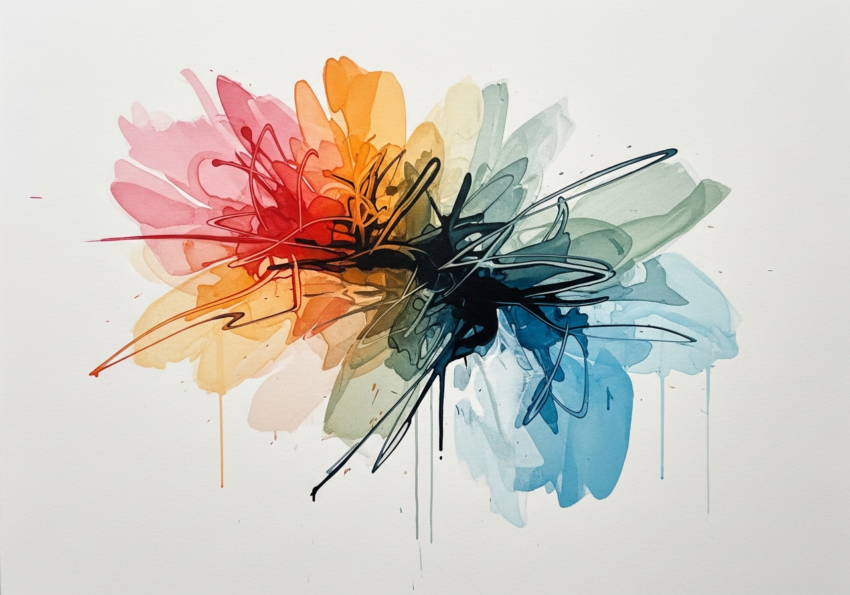
We looked at what we’d made, and it was messy. Gloriously, undeniably messy. But it was also there — real marks on a real page, made by a real hand on a Tuesday morning in a kitchen that smelled like toast. And we realized that every rough draft, every lopsided sketch, every sentence that wandered off and forgot where it was going, was not evidence of failure. It was evidence of showing up. It was proof that we cared enough about something to do it imperfectly rather than not do it at all. There’s a kind of courage in that — the quiet, unglamorous kind that never makes it onto motivational posters.
What the Mess Left Behind
By the time the tea was fully cold, we’d filled three pages. None of them were going in a gallery. None of them were going to change the world. But we felt lighter — genuinely, physically lighter — in a way that had nothing to do with the product and everything to do with the process. We’d met our own judgment, and instead of fighting it or believing it, we’d simply kept going alongside it. The judgment didn’t disappear. It just got quieter, the way background noise does when you stop resisting it.
We closed the notebook and left it on the table, coffee ring and all. Tomorrow we might open it again, or we might not. But today we learned — or maybe re-learned, because this is the kind of thing that has to be re-learned constantly — that creativity isn’t about talent or inspiration or waiting for the right moment. It’s about willingness. Willingness to be bad at something. Willingness to let the mess be the message. Willingness to pick up the pen and say, I don’t know what this is yet, but I’m here for it.
If something in you has been waiting for permission to create — to write the rough draft, hum the unfinished melody, doodle in the margins — consider this your reminder that the permission was always yours to give. The mess is not the obstacle. The mess is the path. Show up for it today, even imperfectly. Especially imperfectly.